

Part 6: Between Reason and Adrenaline – The Art of Smart Racing
Through the series of articles within the Cycling Academy with Matej Mohorič, we promote a culture of respect for the road, the rules, and one another. Respectful. Sporty. Safe.
In Part 6 of the Cycling Academy with Matej Mohorič series, created as part of Merkur zavarovalnica L’Etape Slovenia by Tour de France, we focus on the moment when theory turns into practice—race day. It is the day when your body may not be at its best, when the pace isn’t exactly as you imagined, and when you must adapt to others. That is why one golden rule applies: it’s not your legs that decide, but your judgment, patience, and composure.
Listen to your body, not your plan
Very often, you arrive at the start with a clear plan—how fast you will begin, how you will ride certain sections, and where you will “attack.” But on the day of the event, your body often tells a different story. Sometimes it’s just slight fatigue; other times it’s nervousness or poor sleep affecting how you feel.
The biggest mistake is sticking rigidly to your plan while ignoring your sensations. It is far wiser to stay flexible—use the first few kilometres to observe how your body responds and allow yourself the space to adapt. If you feel slightly heavy, start a bit slower. If you feel good, don’t let that lure you into starting too fast.
The right decision is always the one that reflects the current state of your body, not the memory of your training.
Recreation is not professional sport—and that is its beauty
At the start, it’s easy to fall into the mindset that you must ride a “perfect race.” But L’Étape Slovenia is not a professional stage. No one needs to prove they are an elite athlete. What truly matters is that you are an active recreational cyclist in good shape, capable of managing your effort wisely while balancing everyday life.
Taking part in L’Étape is the cherry on top—a tribute to your consistent, active lifestyle.
Enjoy the experience, appreciate your body
As a recreational cyclist free from the pressure of coaches, selectors, or performance expectations, you can afford to listen to your body more—which leads to a far more enjoyable race experience. A smart recreational rider understands their limits and never rides at maximum capacity for the entire route. Instead, they maintain a steady rhythm, stay focused, and prioritise safety over risky manoeuvres.
Those who understand the art of smart riding usually achieve better results—and, above all, enjoy the experience far more. They feel more fulfilled and, quite simply, happier.
The first kilometres matter more than you think
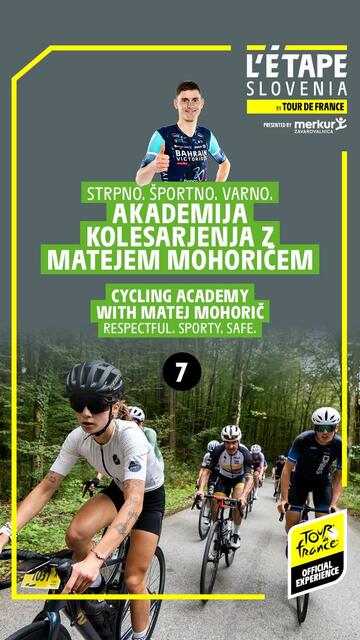
The start of L’Étape Slovenia is very specific. Adrenaline, the crowd, and the energy of the event create the feeling that you must immediately match the pace. That pace is almost always faster than what you are used to in training.
That is why the first 10–15 kilometres are a true test of self-control. If you give in to a group pace that is slightly too fast for you, it quickly shows: heart rate rises, legs fill with lactate, and after only half an hour you lose stability—sometimes even leading to cramps.
The smart decision goes against the adrenaline-driven impulse: start a bit more conservatively, even if it feels like you’re “falling behind.” In reality, you are laying the foundation for a strong second part of the route. The riders you let go at the beginning will often reappear on the first serious climb—or certainly in the final kilometres.
Accept the crowd as part of the event
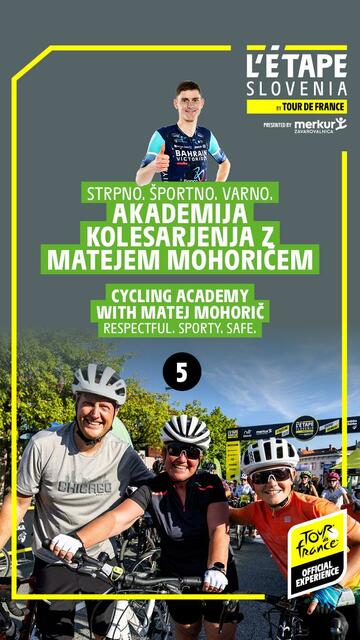
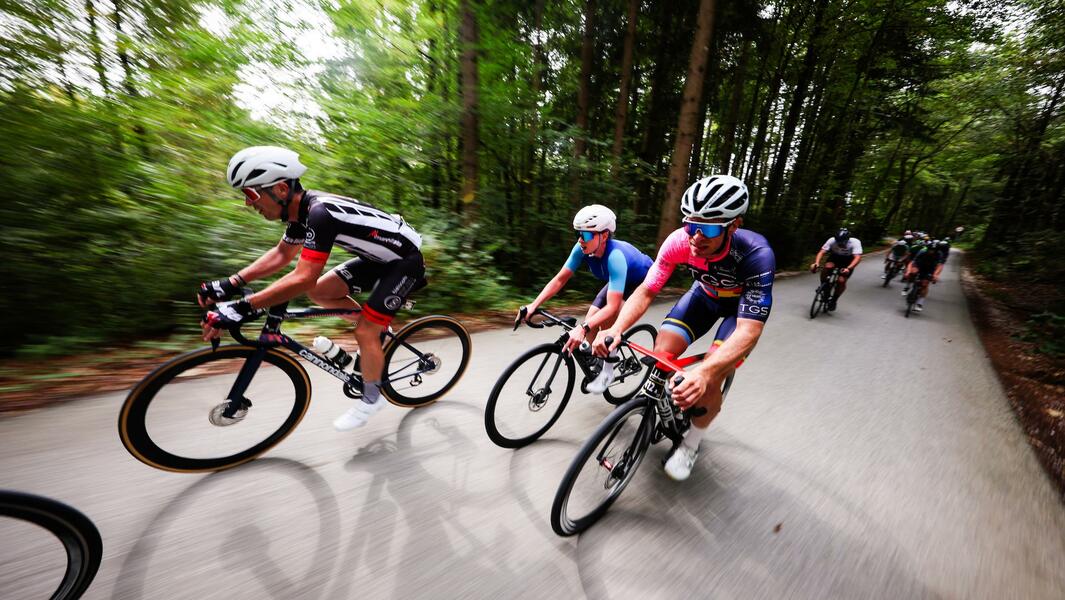
One of the biggest differences between training and event riding is the number of people on the road. Crowds mean more braking, more awareness, less ideal line choices, and more adaptation.
It’s important to accept that things won’t always go according to your plan. In some sections, the pace slows; elsewhere, it speeds up. Sometimes you must wait; other times you must react. If you fight the crowd, you waste energy. If you accept it, it becomes part of your rhythm.
A good rider at such an event is not the one who insists on riding their own race, but the one who knows how to ride within the system—safely, calmly, and with awareness of space.
The rhythm constantly changes
In training, you usually control your own pace. In an event, the rhythm constantly changes—due to groups, wind, terrain, and road situations.
This means you must be ready to adapt: sometimes accelerate slightly to catch a group, other times consciously ease off to preserve energy. The key is understanding that you don’t react to every change—only to those that actually benefit you.
Many recreational riders make the mistake of trying to follow every move of the group. A smarter choice is selective: maintain your own rhythm whenever possible and engage only when it makes sense.
Patience and composure are your greatest advantages
On race day, it’s not the strongest rider on a segment who wins, but the one who rides most consistently—and that comes from patience.
Patience means not reacting impulsively, not forcing your way into every gap, not chasing every acceleration, and recognising at the right moment: “this is not my pace.” Composure means maintaining control—relaxed hands, steady breathing, and focus on the road.
When you are calm, your bike is stable. When you are stable, you ride safer—and use your energy more efficiently.
Create your own pre-start ritual
Amid the chaos of the event, it helps to have something familiar. A short pre-start ritual can calm your mind and bring your focus inward, away from the crowd.
It doesn’t need to be complicated. It can be checking your equipment, a few minutes of calm breathing, or a simple routine you repeat before every ride. The goal is not a “perfect preparation”, but a sense of control and stability before the start.
When you stand in the start corridor, the most valuable thing is being calm and focused.
Respect for others is part of cycling culture
At such an event, many cyclists with different levels of experience, pace, and goals take part. This means you will encounter a wide range of behaviours—from highly experienced riders to less confident ones. It’s important to remain tolerant. Don’t react to every imperfect move, don’t seek conflict, and don’t add unnecessary stress. It helps no one—least of all yourself.
Cycling culture is reflected in your behaviour: how you treat others when things are not ideal and you are under pressure. Knowing how to stay calm and yield is part of it.
A short tip from Matej Mohorič
On race day, it’s not the strongest moments that win, but the smartest decisions. If you can start calmly, listen to your body, and stay composed, you’ve already done more than half the work towards a good result.” — Matej Mohorič
Conclusion
Race day is a test—not only of physical fitness, but of a cyclist’s maturity.
If you respect your body, start under control, accept the reality of the crowd, and remain patient, your ride will be stable—and, above all, enjoyable.
At the end of the day, what you’ll remember most is the feeling of riding smart, the atmosphere on and along the route, and how you felt crossing the finish line. Times and numbers fade. Allow yourself to experience the event in a grand way—one that fills you with lasting memories.